
6 hr
Full-Day Bora Bora Lagoon Safari with Motu Lunch
- Expert local guide
- Small group
- Skip-the-line access
- Free cancellation
Bora Bora Snorkeling Excursion — Lagoon Safaris & Coral Gardens
Glide through turquoise shallows, trace the volcanic rim where rays patrol the sand
Compare fares, pick the fit — all bookings are mobile-voucher and eligible for free cancellation where shown.
6 hr
4 hr
2 hr 30 min
Selecting the right bora bora snorkeling excursion depends on whether you prefer a quick deep-water exploration or a comprehensive day of cultural discovery. Understanding these options helps you navigate the diverse coral gardens and marine sanctuaries of the Bora Bora Lagoon.
| Half-Day Tour Group Experience |
Top pick Full-Day Adventure Cultural & Lagoon Inclusion |
|
|---|---|---|
| Duration | 3.5 hours | 7 hours |
| Included Areas | 3–4 snorkeling spots | 3–4 spots plus motu lunch |
| Access Method | Motorized boat | Motorized boat |
| Equipment Included | ||
| Best For | First-timers | Full-day immersion |
| See tickets & prices |
Verdict: For the best balance of value and wildlife observation, the full-day bora bora snorkeling excursion tour remains the most rewarding choice for visitors.
Worth it for reef access and marine life encounters
A bora bora snorkeling excursion delivers what shore access cannot: guided passage to coral gardens, ray feeding stations, and shark encounters in the protected lagoon. Commercial tours range from half-day lagoon safaris to full-day adventures with motu lunch stops, typically covering multiple snorkel sites in a single outing. The value proposition hinges on logistics—boat transport eliminates the need to rent equipment separately or navigate shallow reef passages on your own. Morning departures between 08:00 and 11:00 capture optimal water clarity before afternoon winds stir sediment. For travelers prioritizing convenience and guaranteed marine life sightings over budget flexibility, bora bora snorkeling excursion tours justify their cost through curated itineraries and local knowledge of seasonal feeding patterns. Shore snorkeling remains free at public beach access points, but commercial excursions reach deeper coral formations and pelagic zones inaccessible from land.
Bottom line: Book a lagoon safari if you want curated marine encounters and remote reef access without the navigation work.
Group tours offer a social atmosphere and fixed routes, while private charters provide complete control over your day on the water; most travelers who weigh these options choose the private route for personal privacy or the group format for social engagement.
|
Top pick Group Snorkeling |
Private Charter | |
|---|---|---|
| Group Size | 8–12 passengers | |
| Customization | Fixed route stops | |
| Host Interaction | Shared attention from guide | |
| Cost Structure | Per-person pricing | |
| Itinerary Flexibility | Limited to tour schedule | |
| See tickets & prices |
Verdict: Choose a bora bora snorkeling excursion tour to share the marine life experience with others, or select a private charter if you prioritize an exclusive bora bora snorkeling excursion tickets experience with a personalized pace.
Hand-picked experiences loved by thousands of travelers
7 hours
Free Cancellation
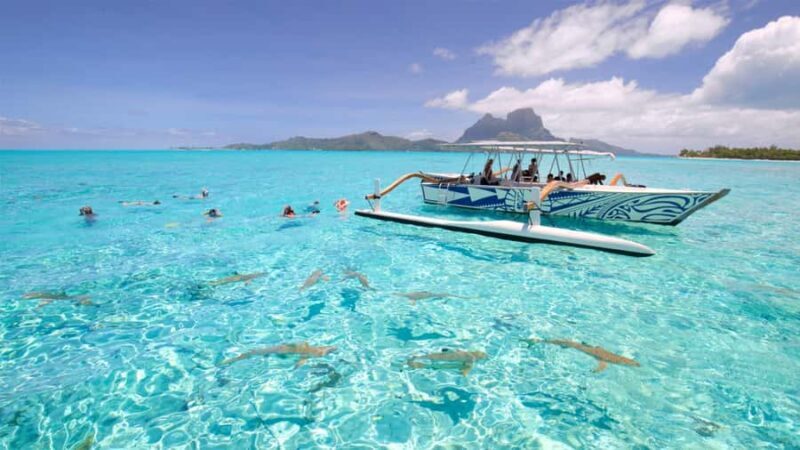
Sail around the island, swim with rays and sharks, explore coral gardens, and feast on a motu beach
6 hours
Free Cancellation
Snorkel with rays and sharks, feast on island cuisine, and dive into Polynesian culture on this day-long escape
4 hours
Free Cancellation
Four-hour guided aquatic journey through three pristine snorkeling sites with marine encounters and island refreshments
6 hours
Free Cancellation
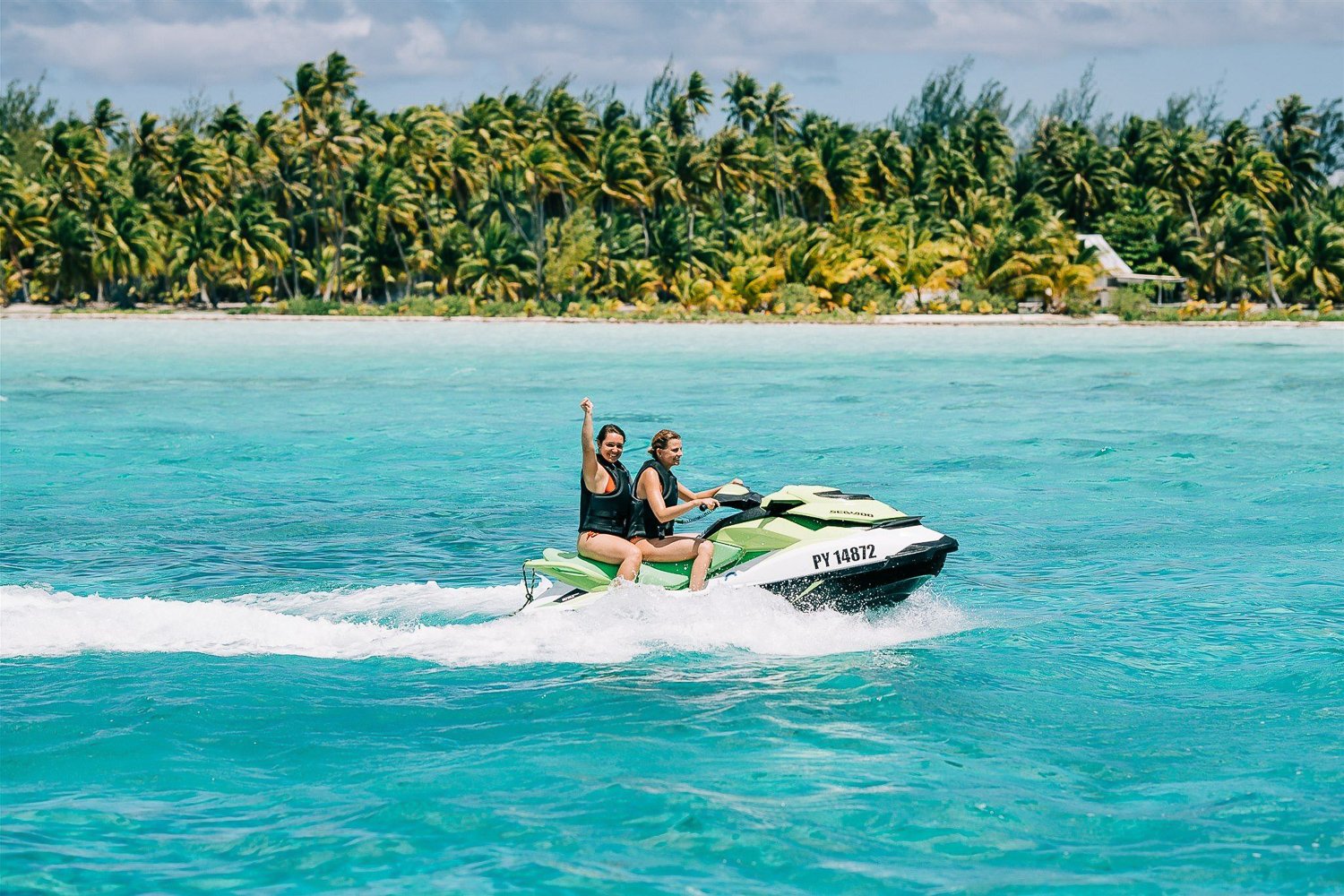
Six-hour lagoon exploration combining jet skiing, shark encounters, and island dining
3 hours
Free Cancellation
Swim with rays and sharks, explore vibrant coral reefs, and relax on a secluded island paradise
3 hours 30 minutes
Free Cancellation
Discover pristine coral gardens and swim alongside rays in crystal-clear Pacific waters
6 hours 30 minutes
Free Cancellation
Six-hour voyage through turquoise waters, swimming with rays and sharks, plus island lunch
3 to 6 hours
Free Cancellation
Explore turquoise waters, swim with rays and sharks, and snorkel vibrant coral gardens on your own schedule
Embark from your dock into the lagoon
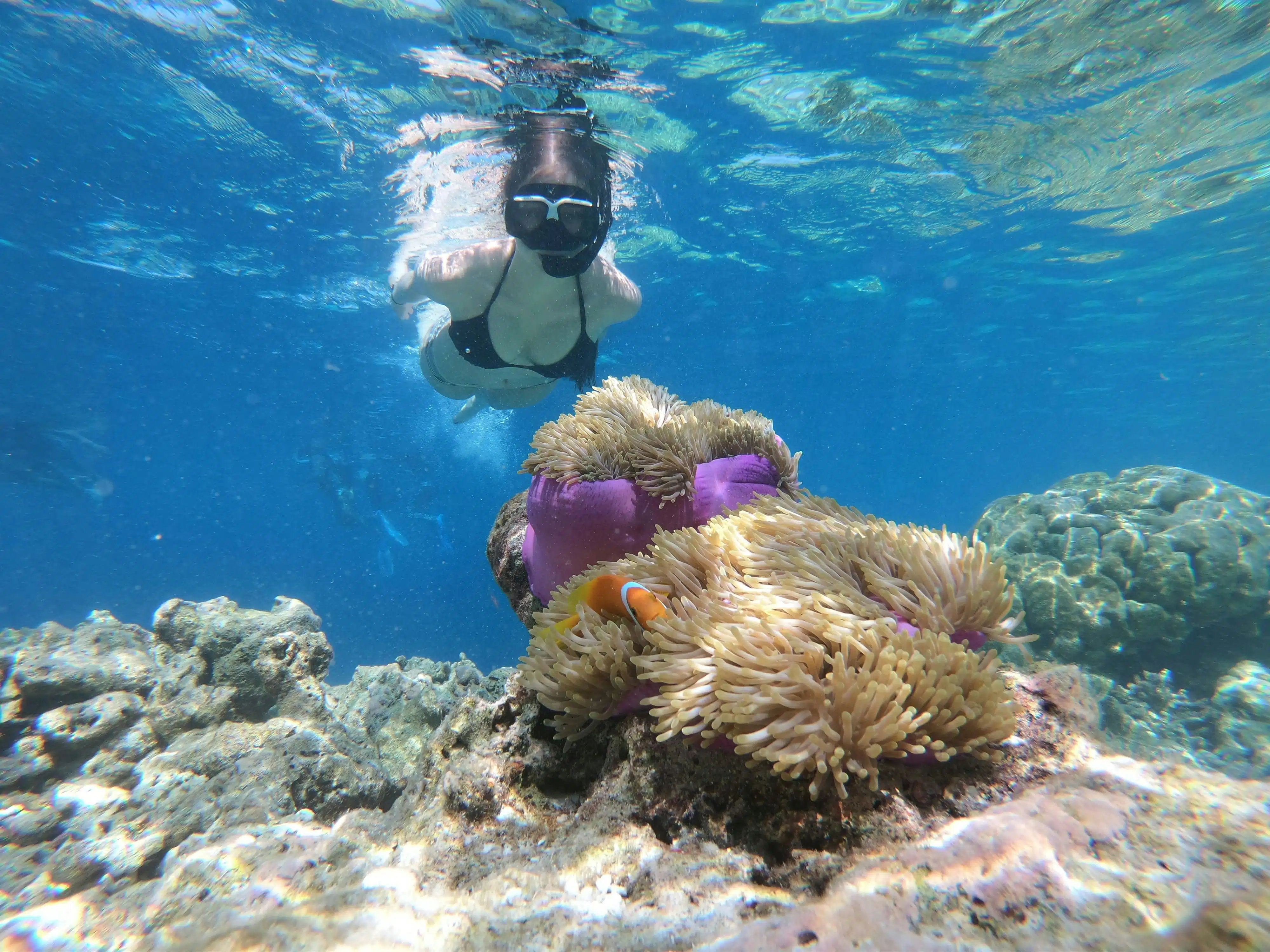
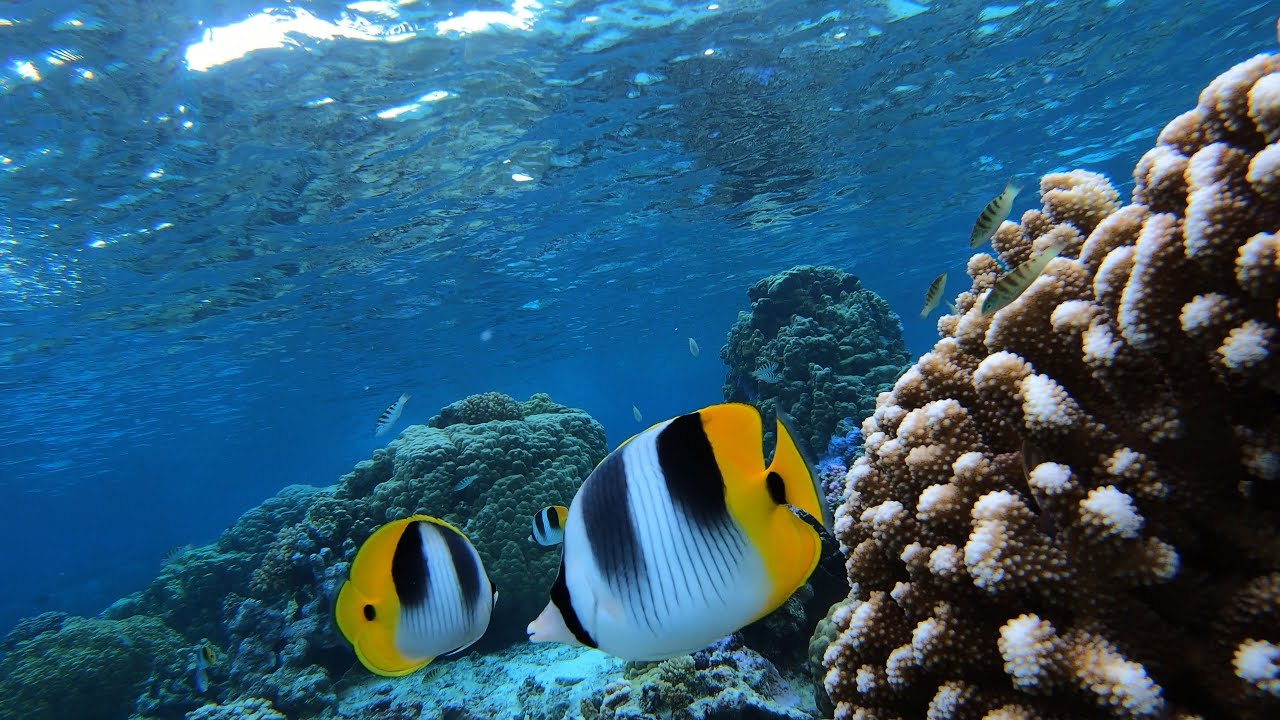
Guided swim over coral gardens
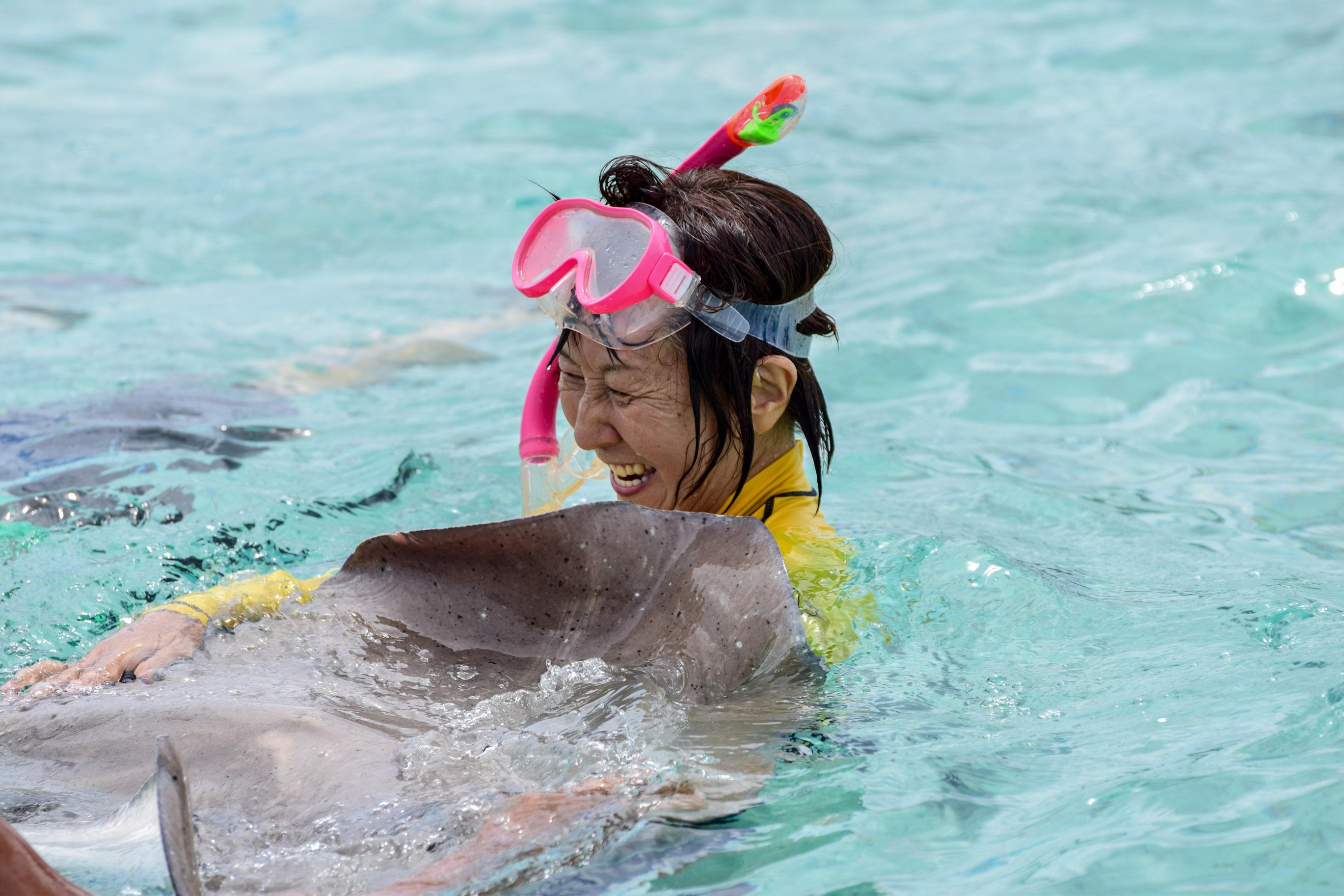
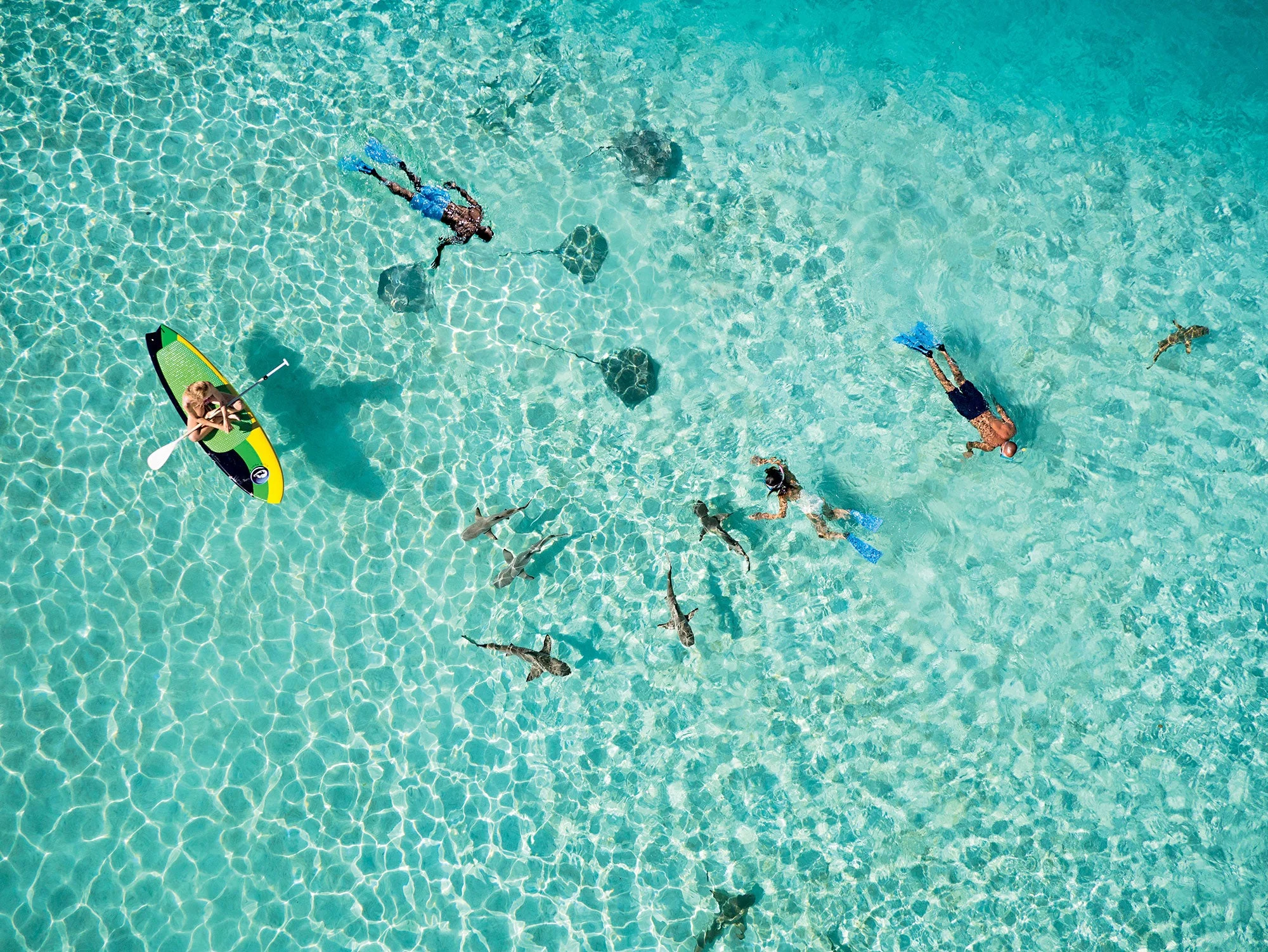
Observe stingrays in shallow waters
Relax on a sandy beach islet
Experience vibrant marine life in shallow protected waters with high visibility.
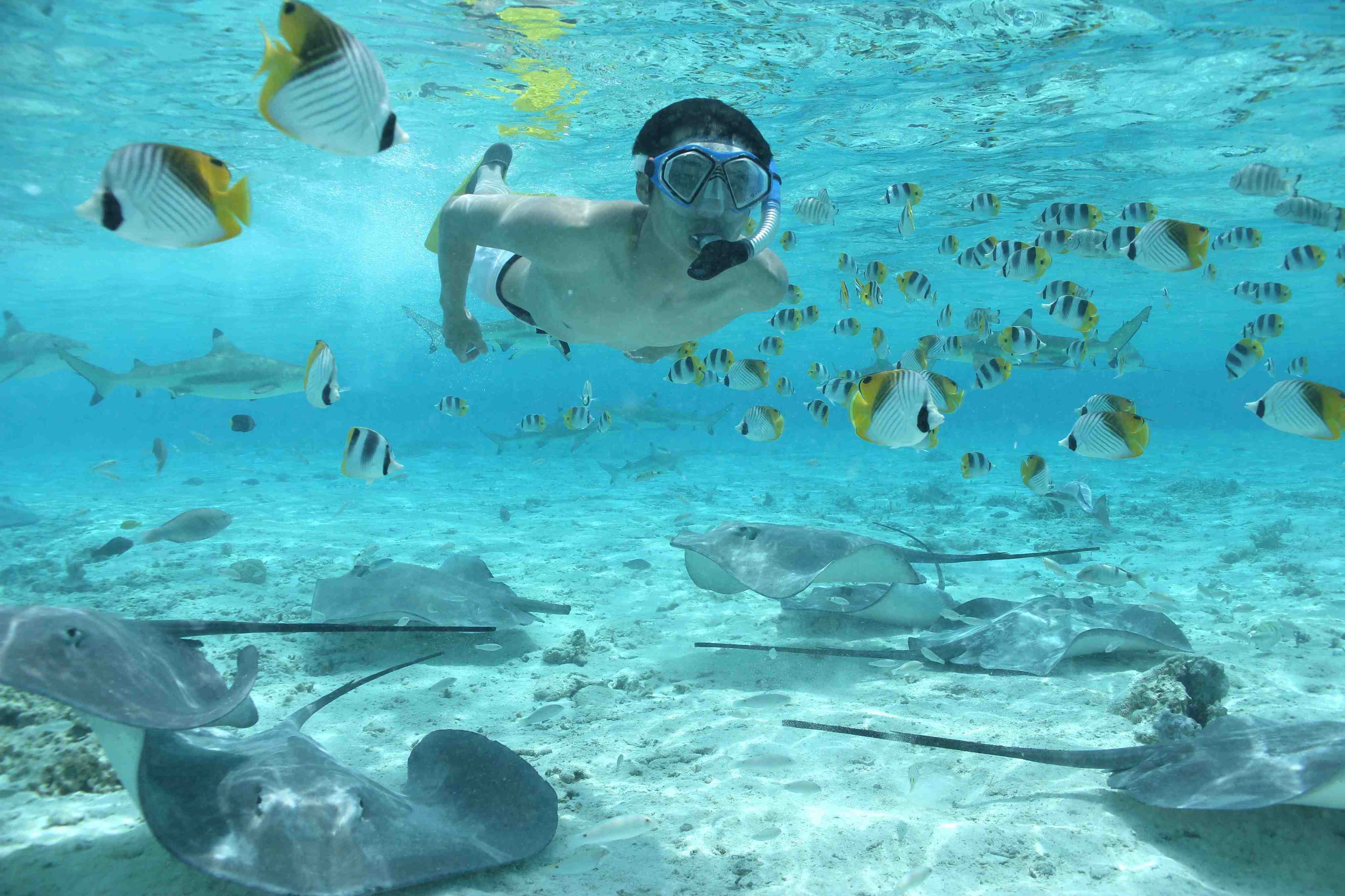
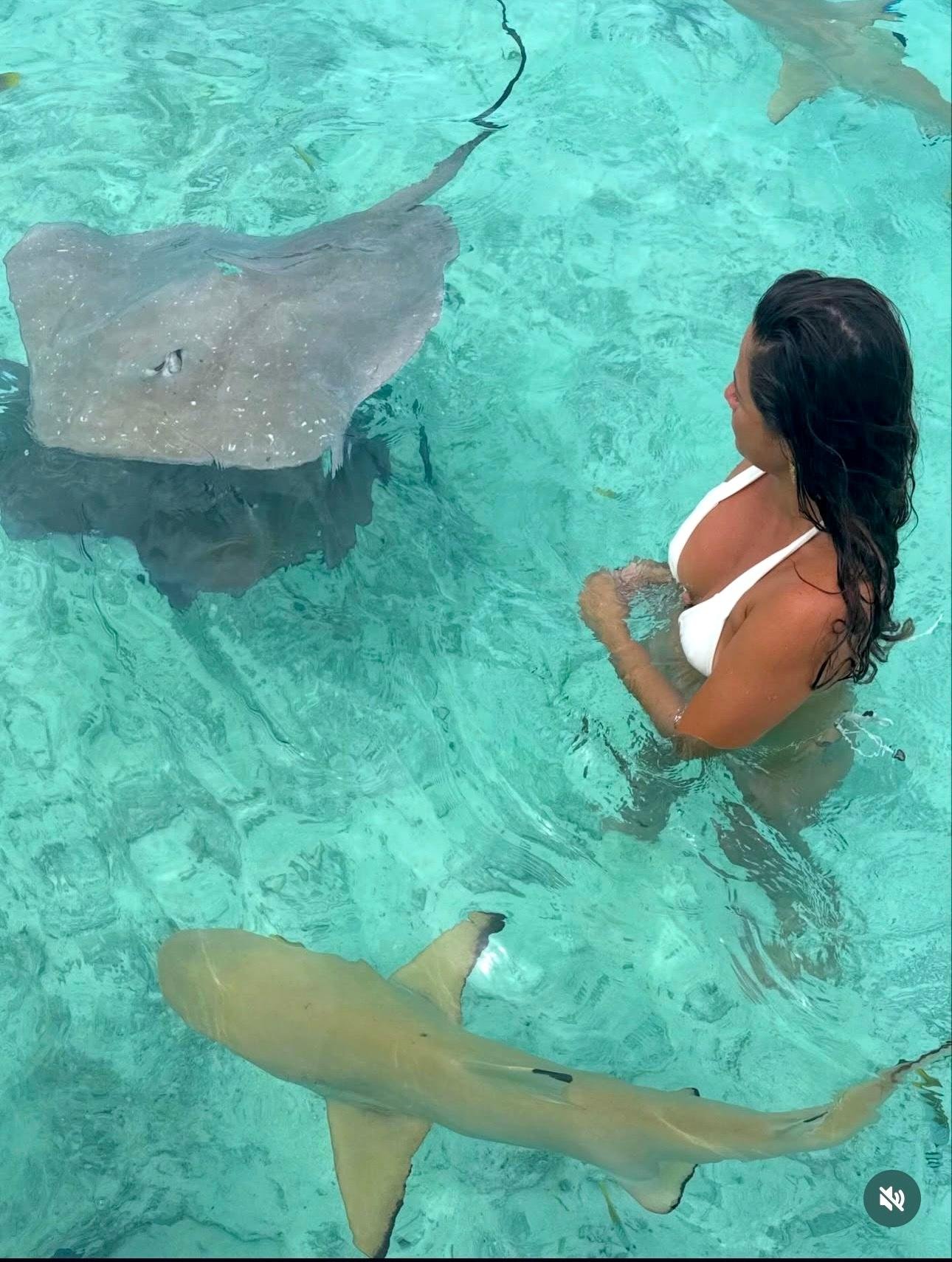
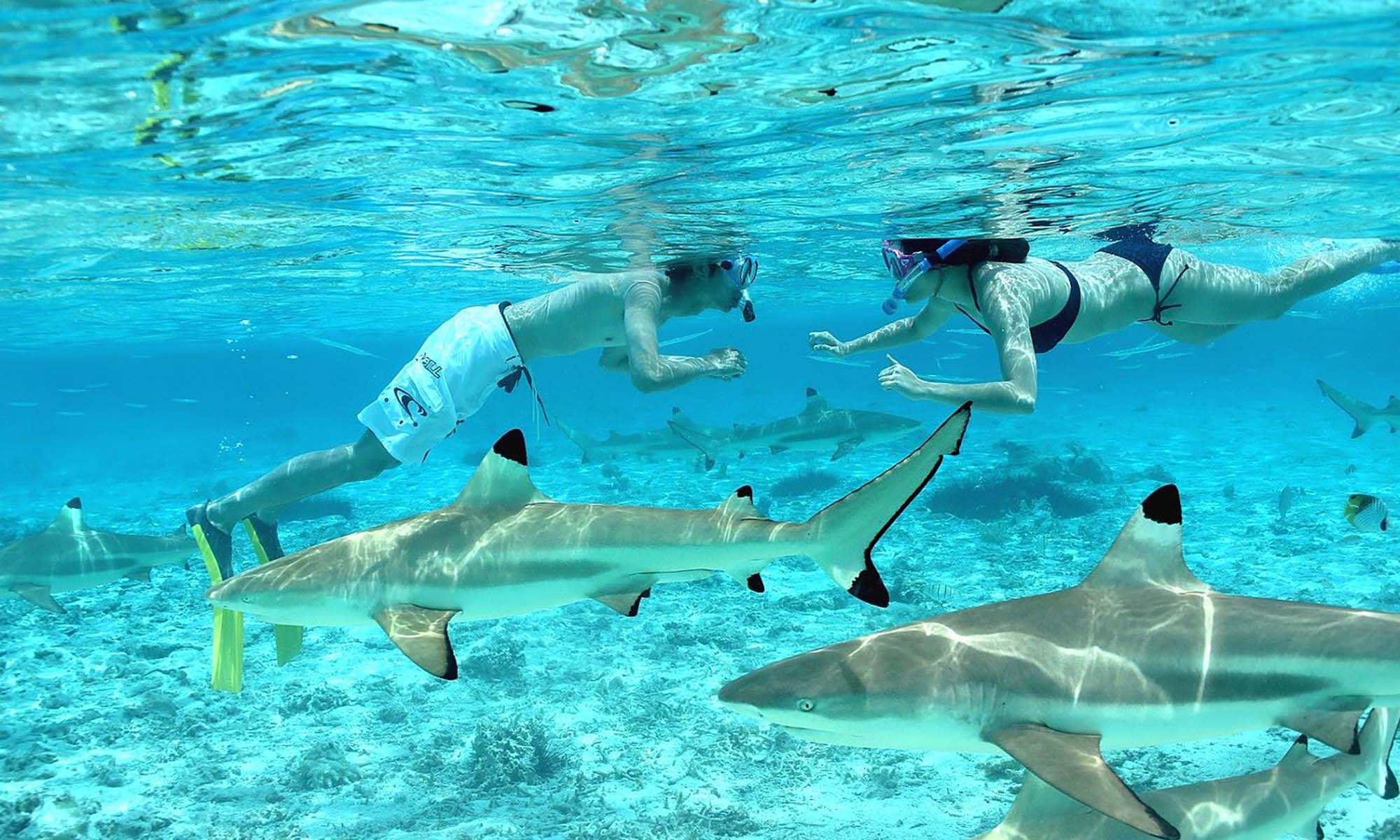
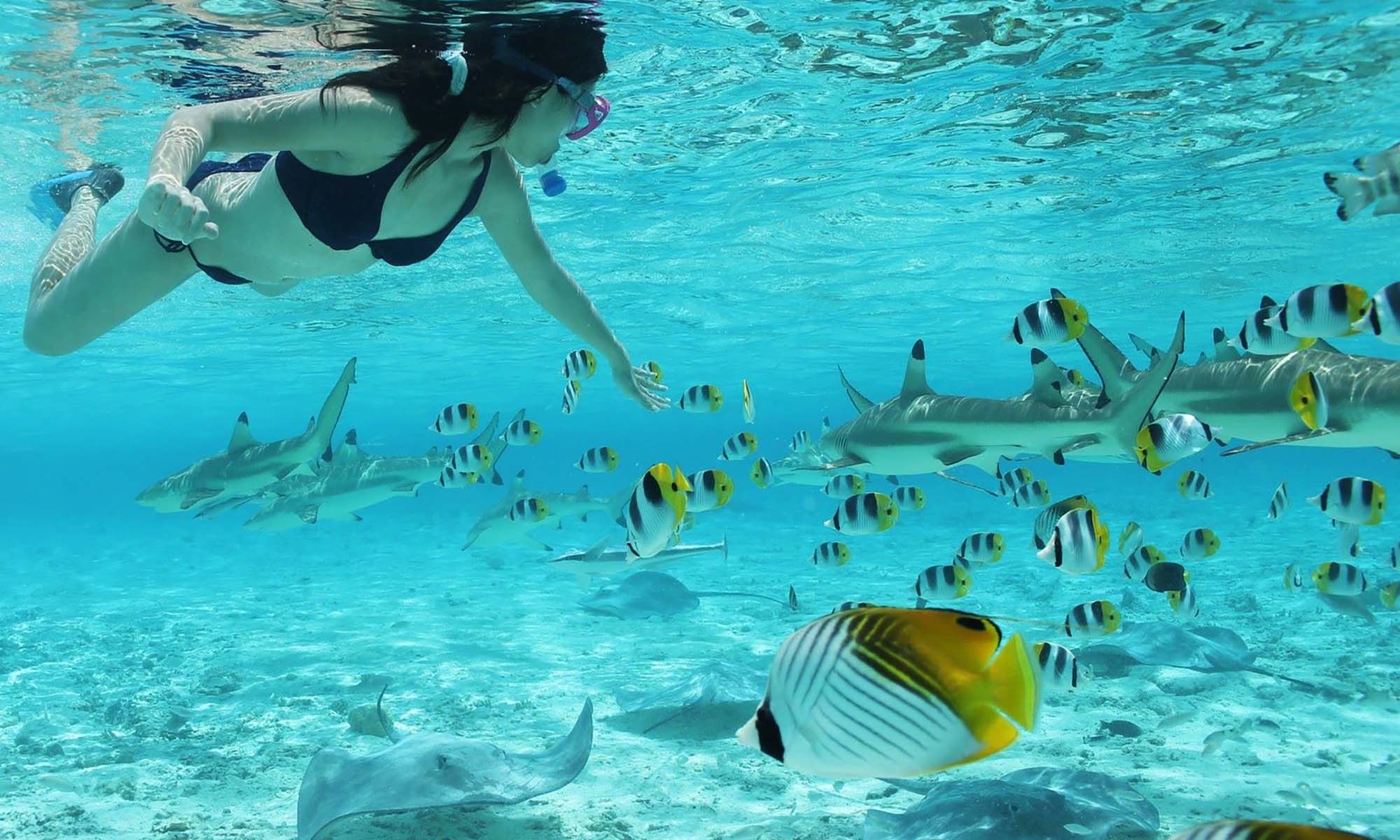
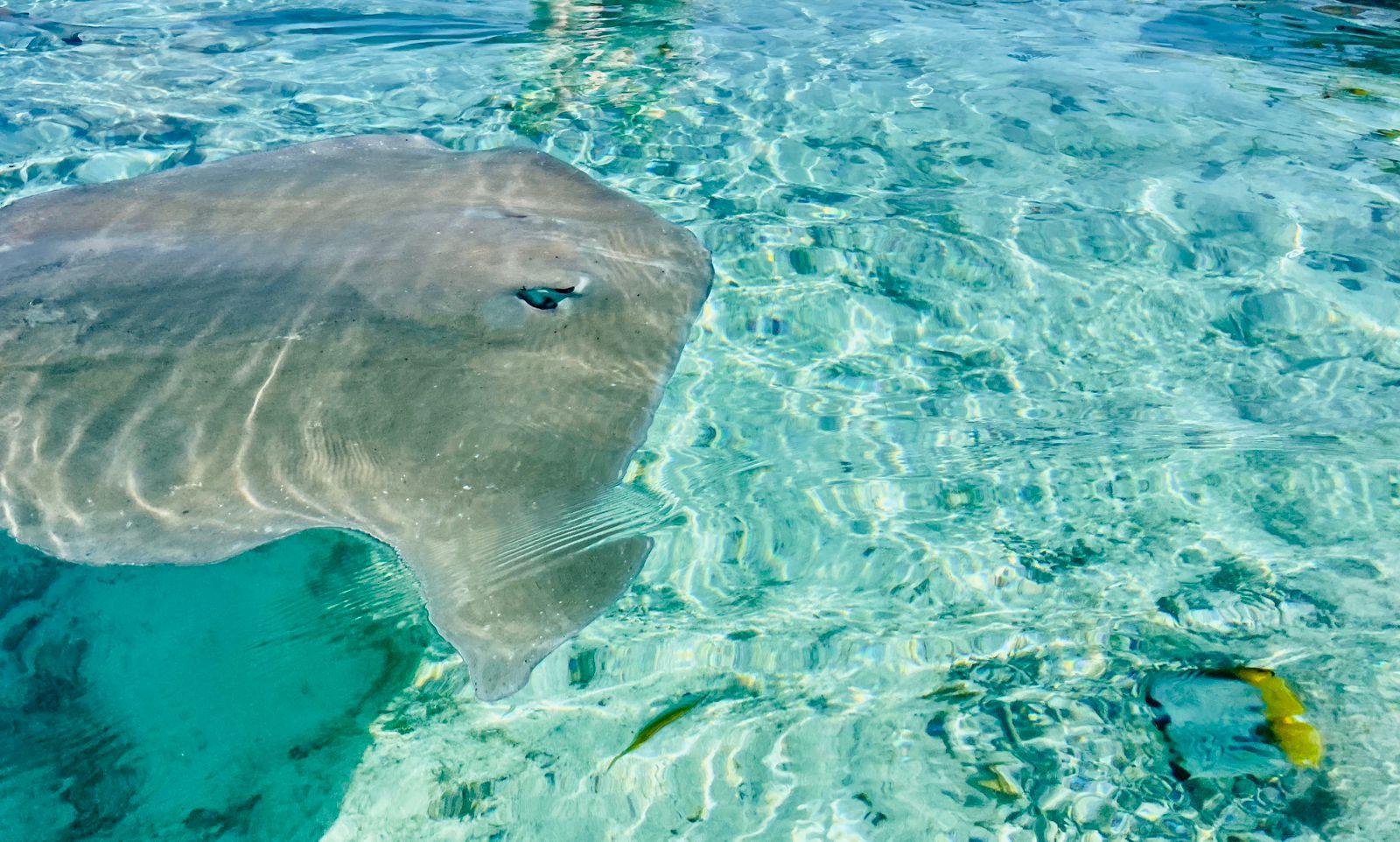
Interact with gentle stingrays in waist-deep clear water during your bora bora snorkeling excursion.
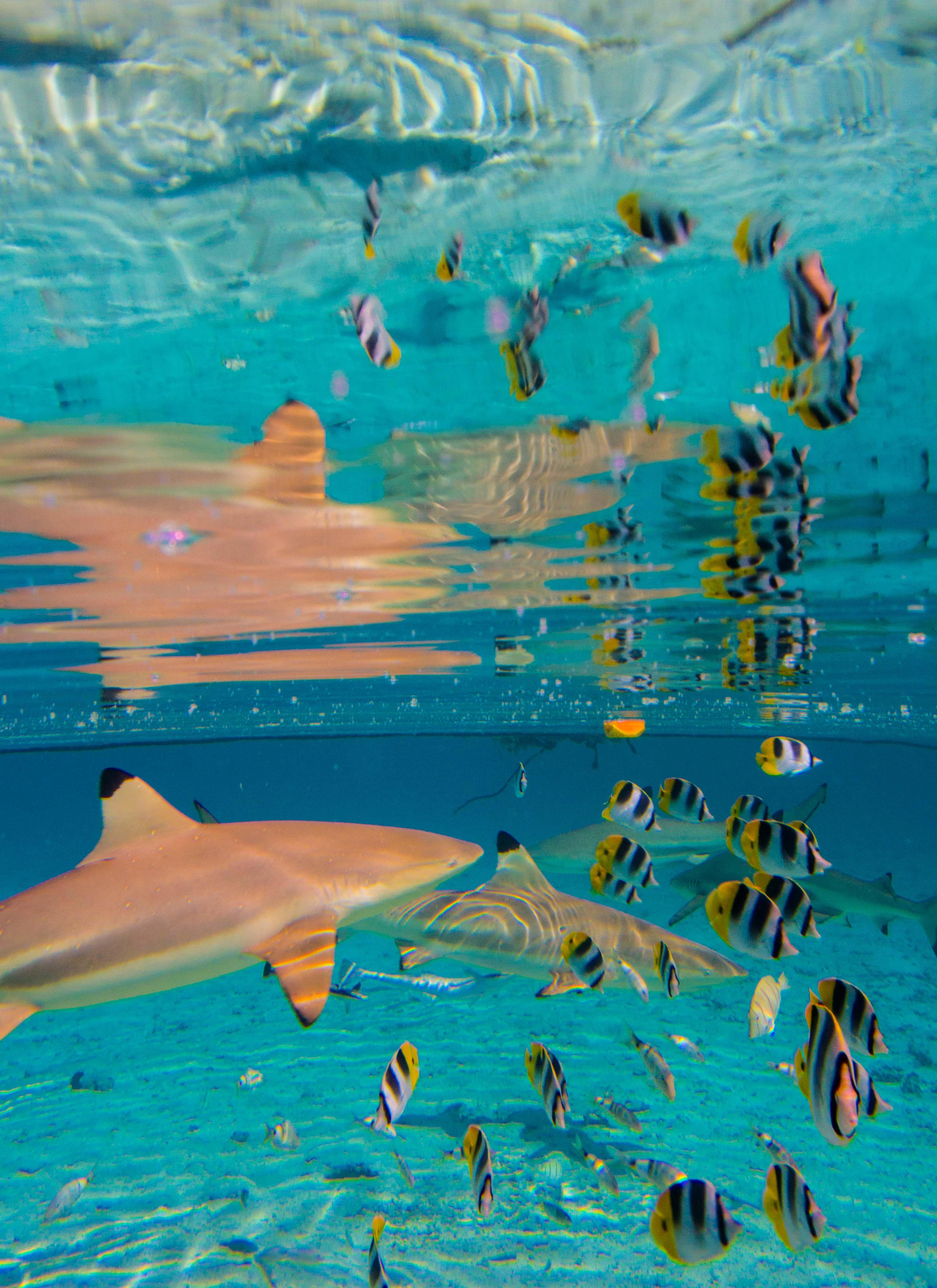
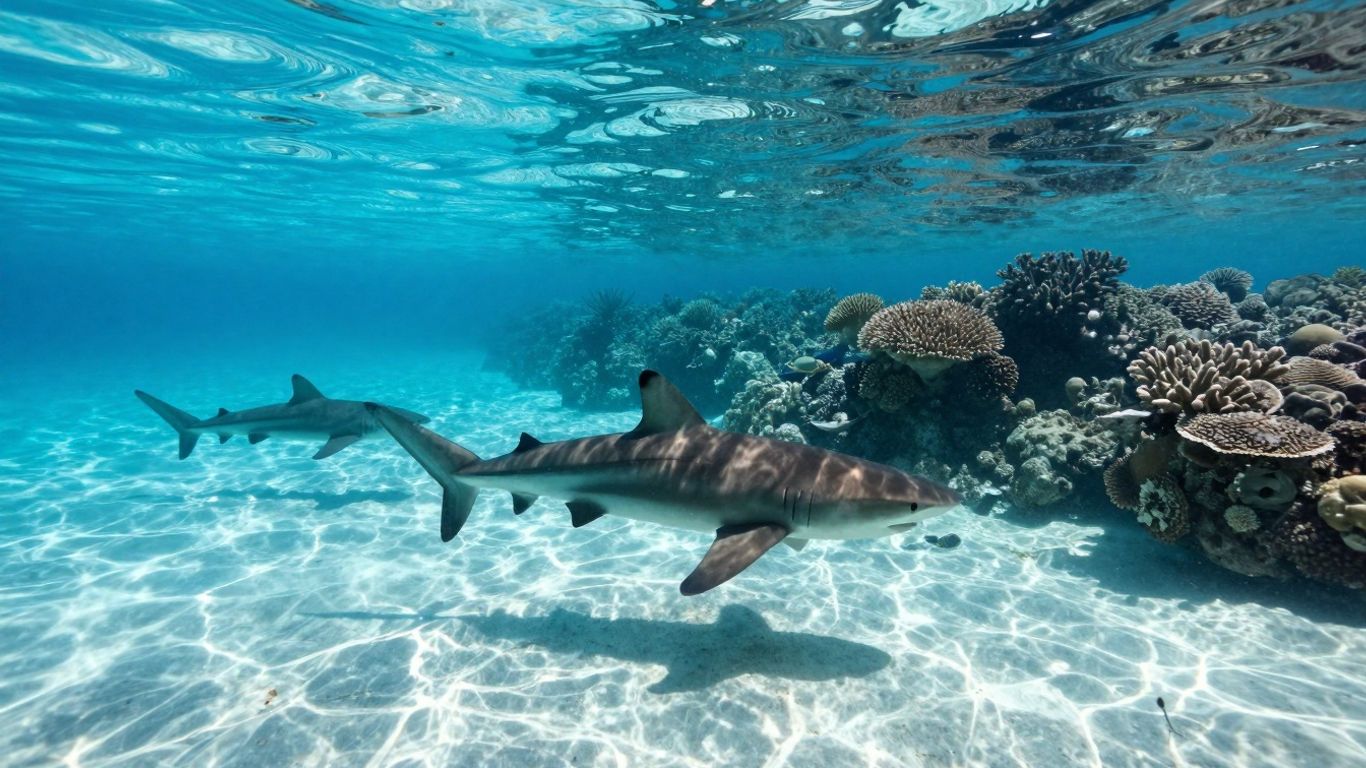
Observe small blacktip reef sharks in their natural habitat from the safety of the boat or water.
Relax on a private or secluded sandbar islet after finishing your main water activities.
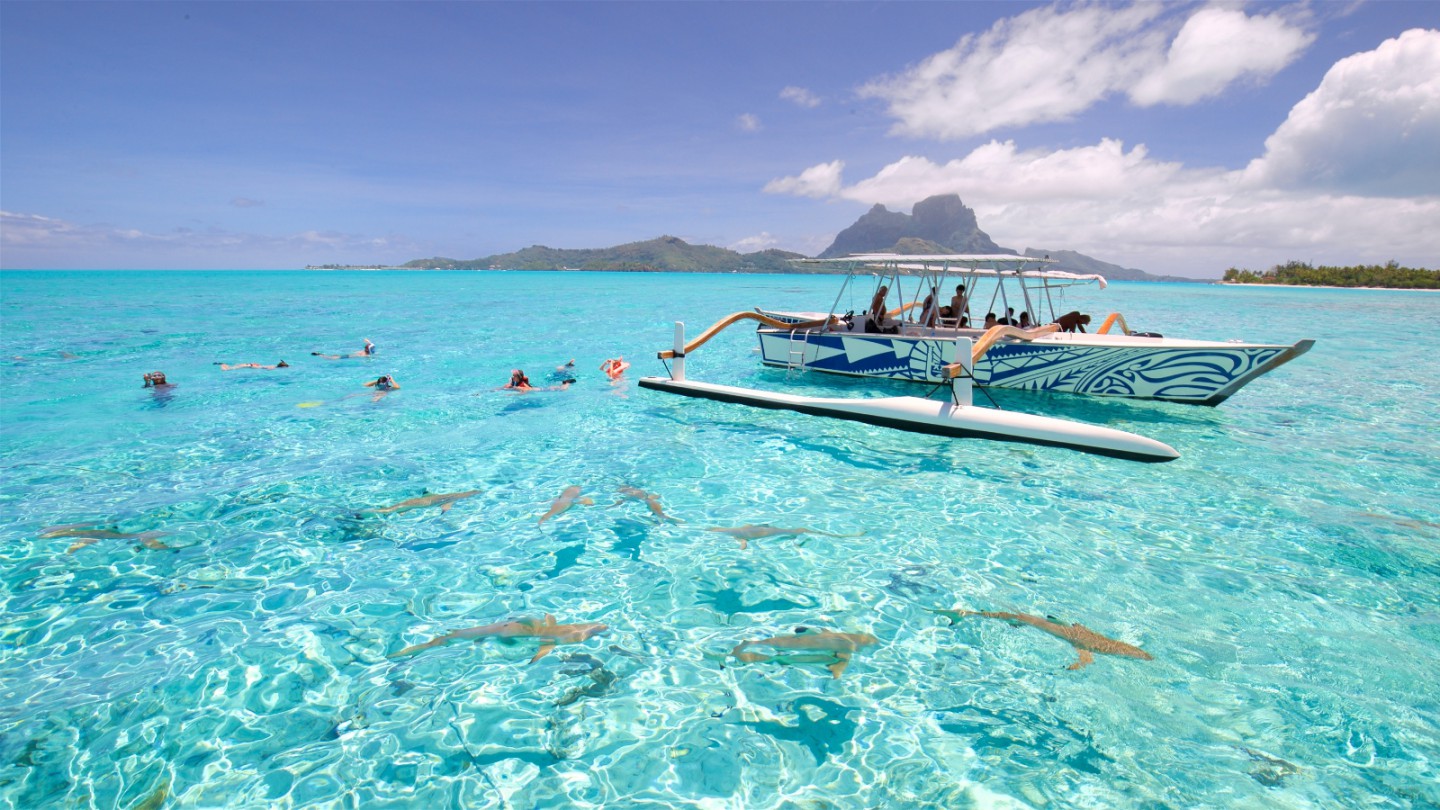
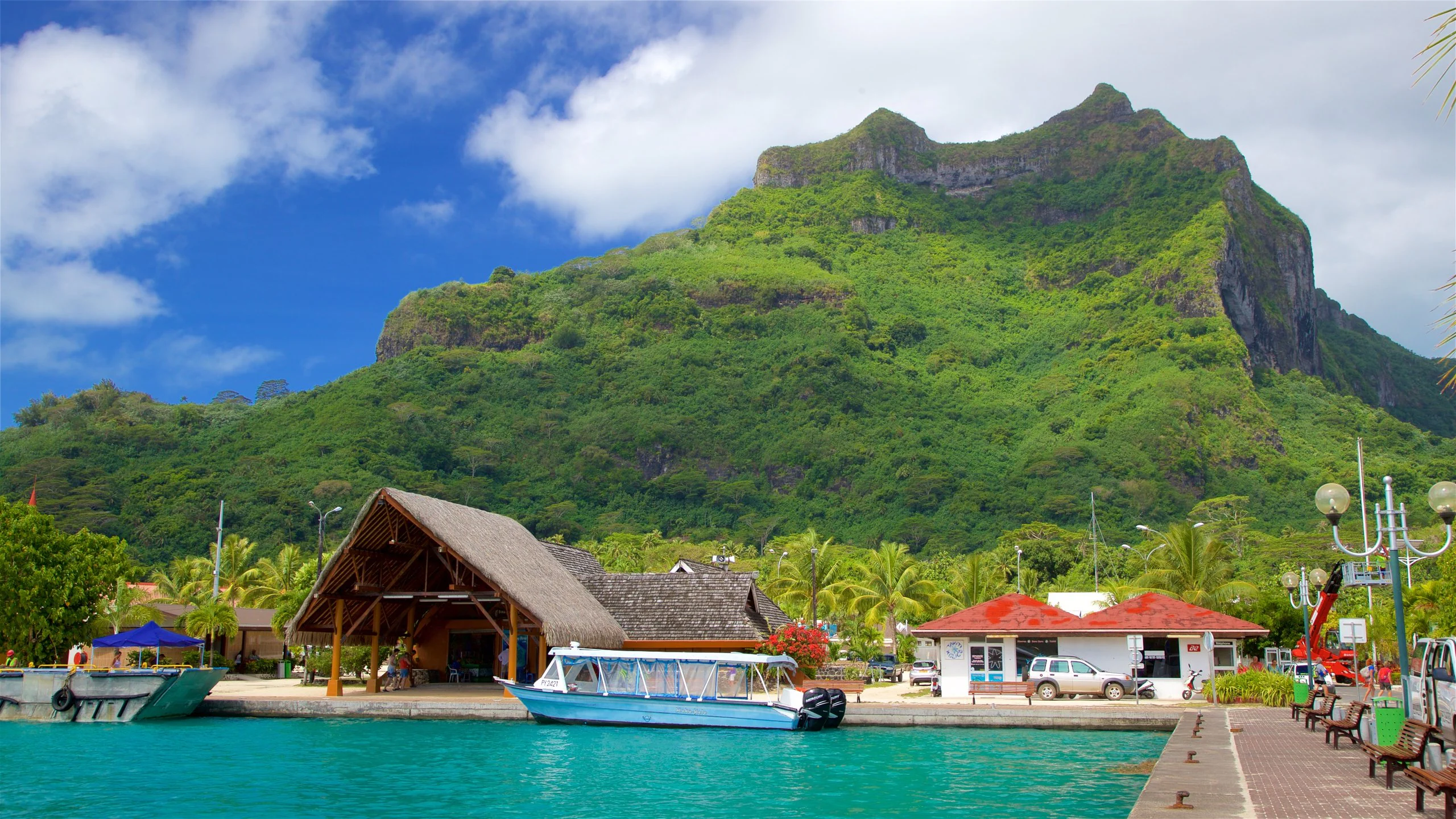
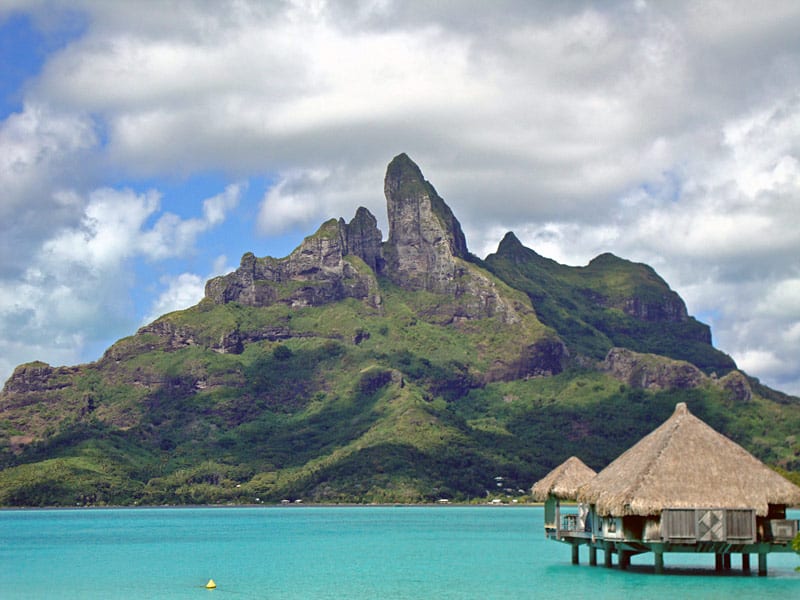
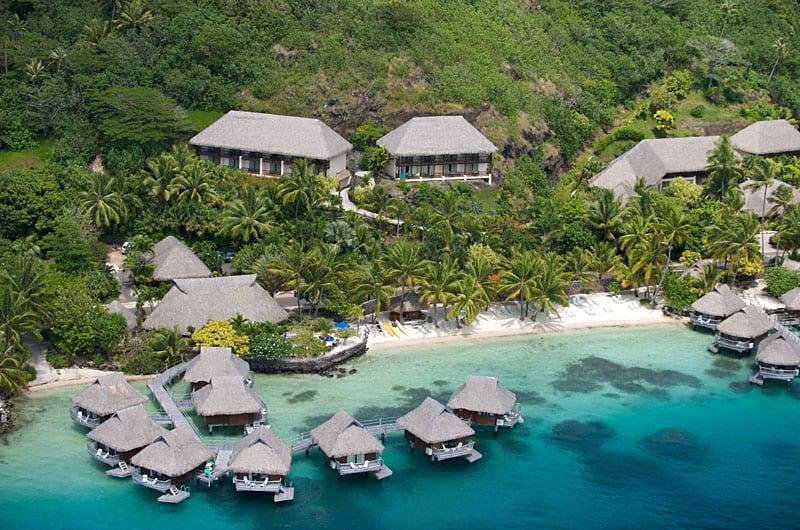
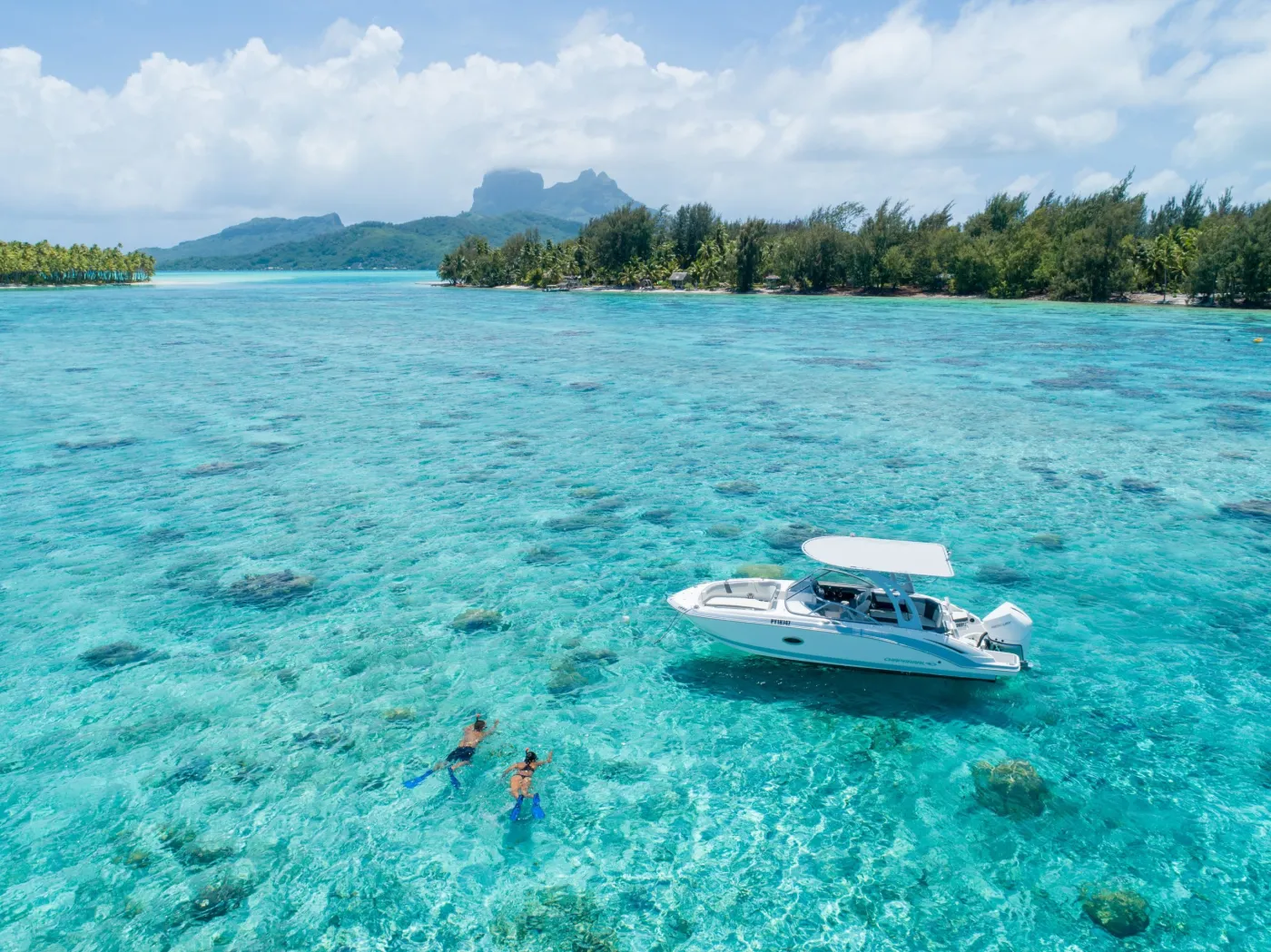
You step from the dock at Vaitape into a covered outboard at eight fifteen, your guide securing fins and masks in a mesh bag at the bow. The boat cuts south along the inner lagoon, passing overwater bungalows on stilts before swinging west toward the barrier reef.
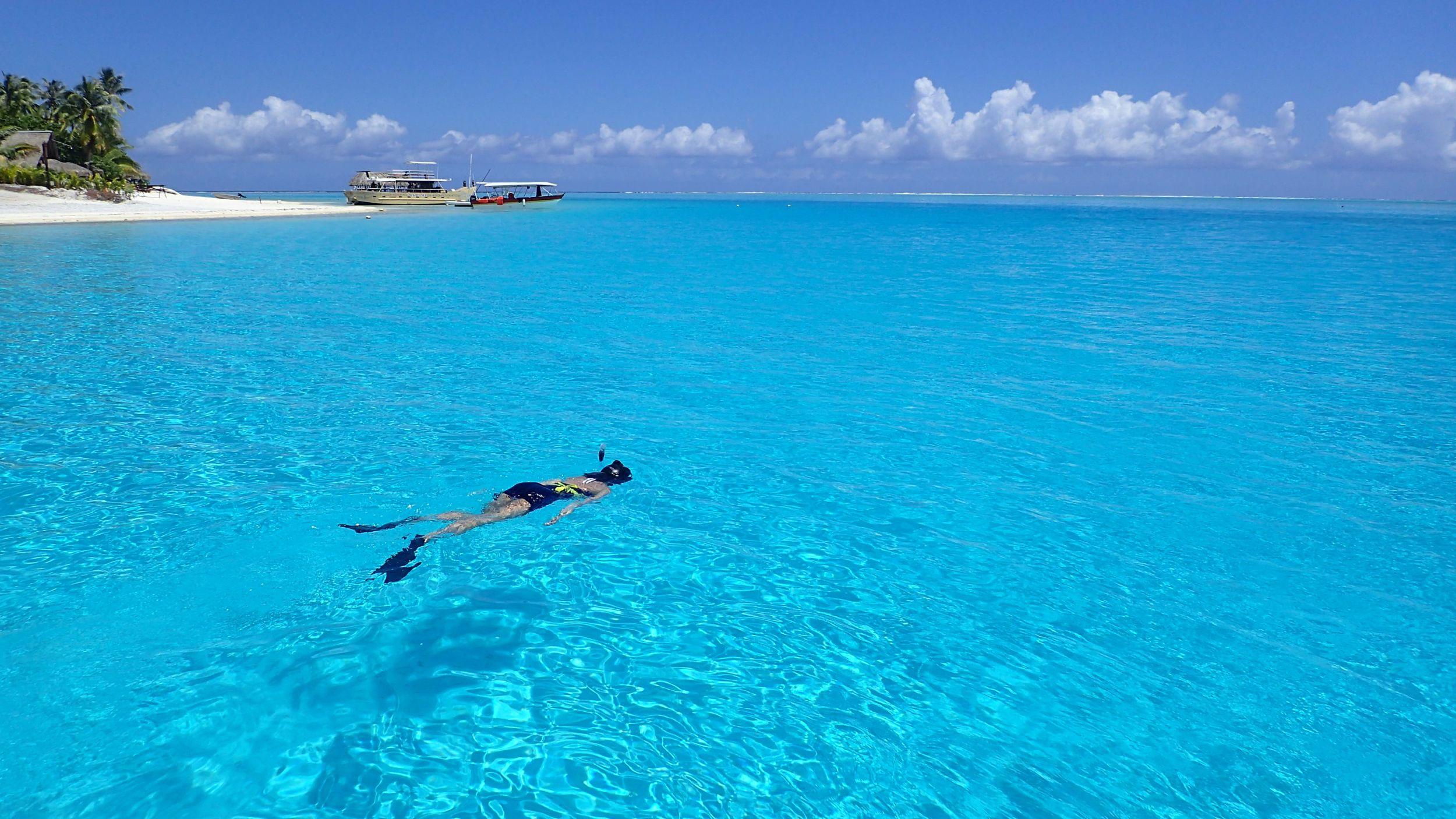
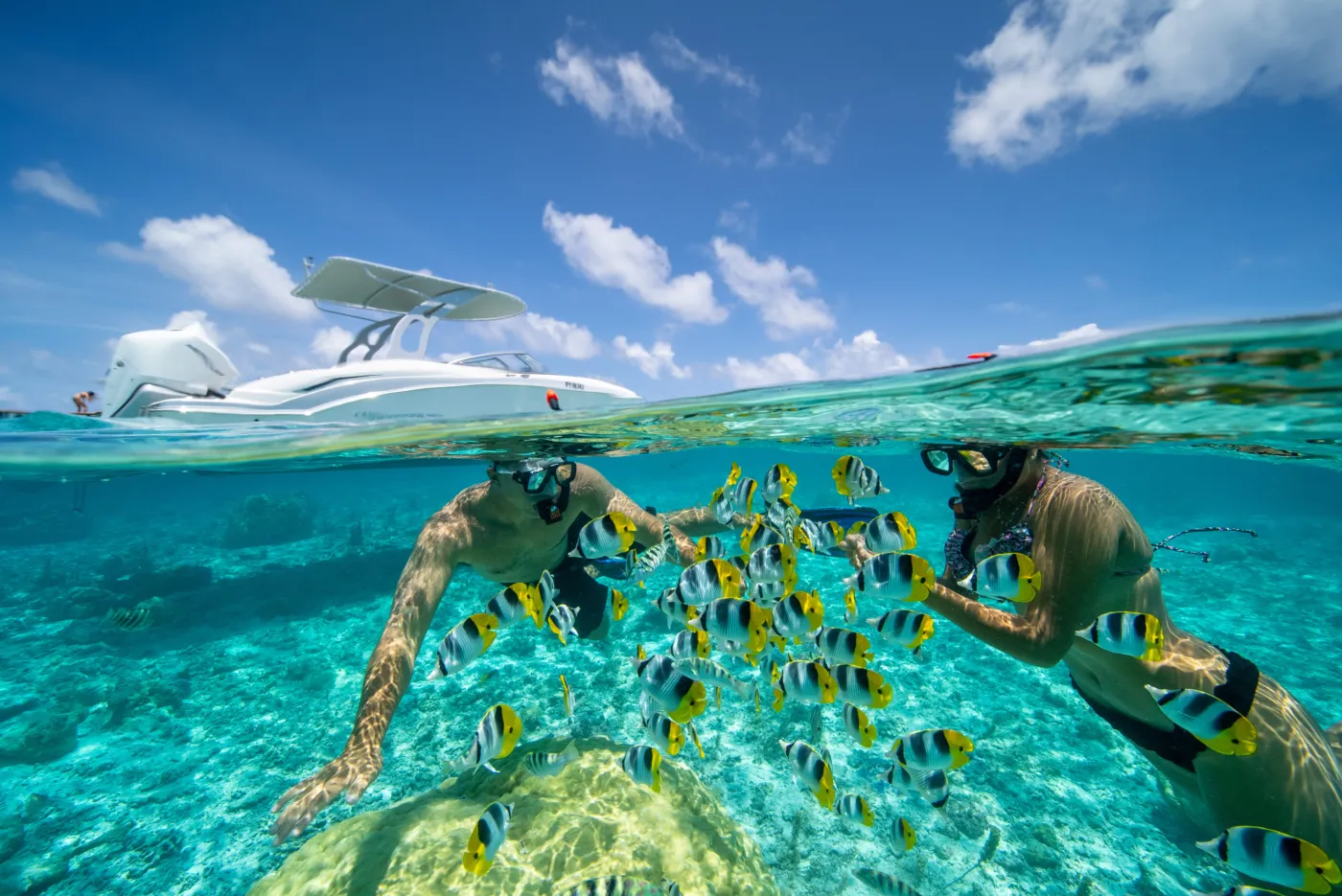
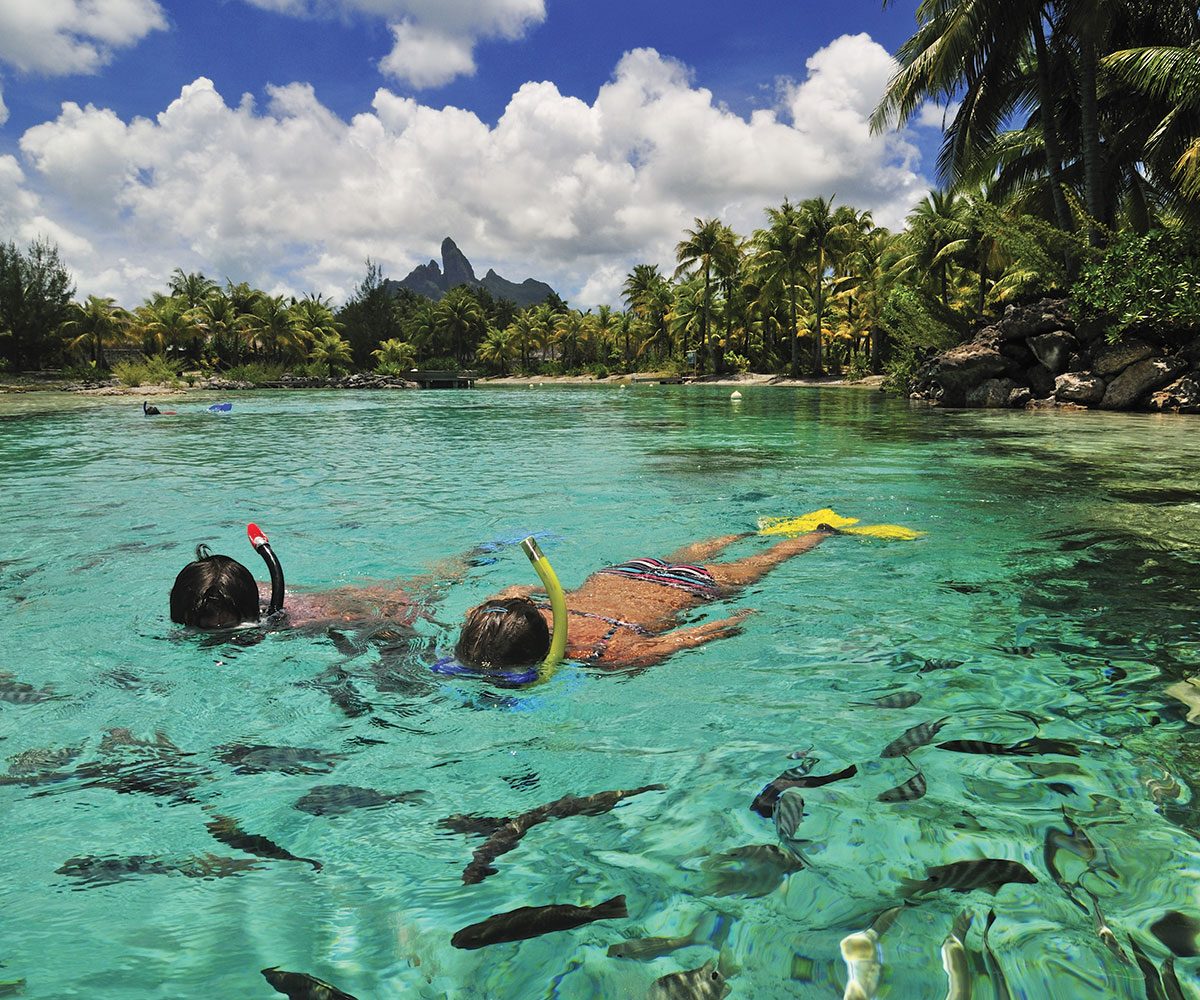
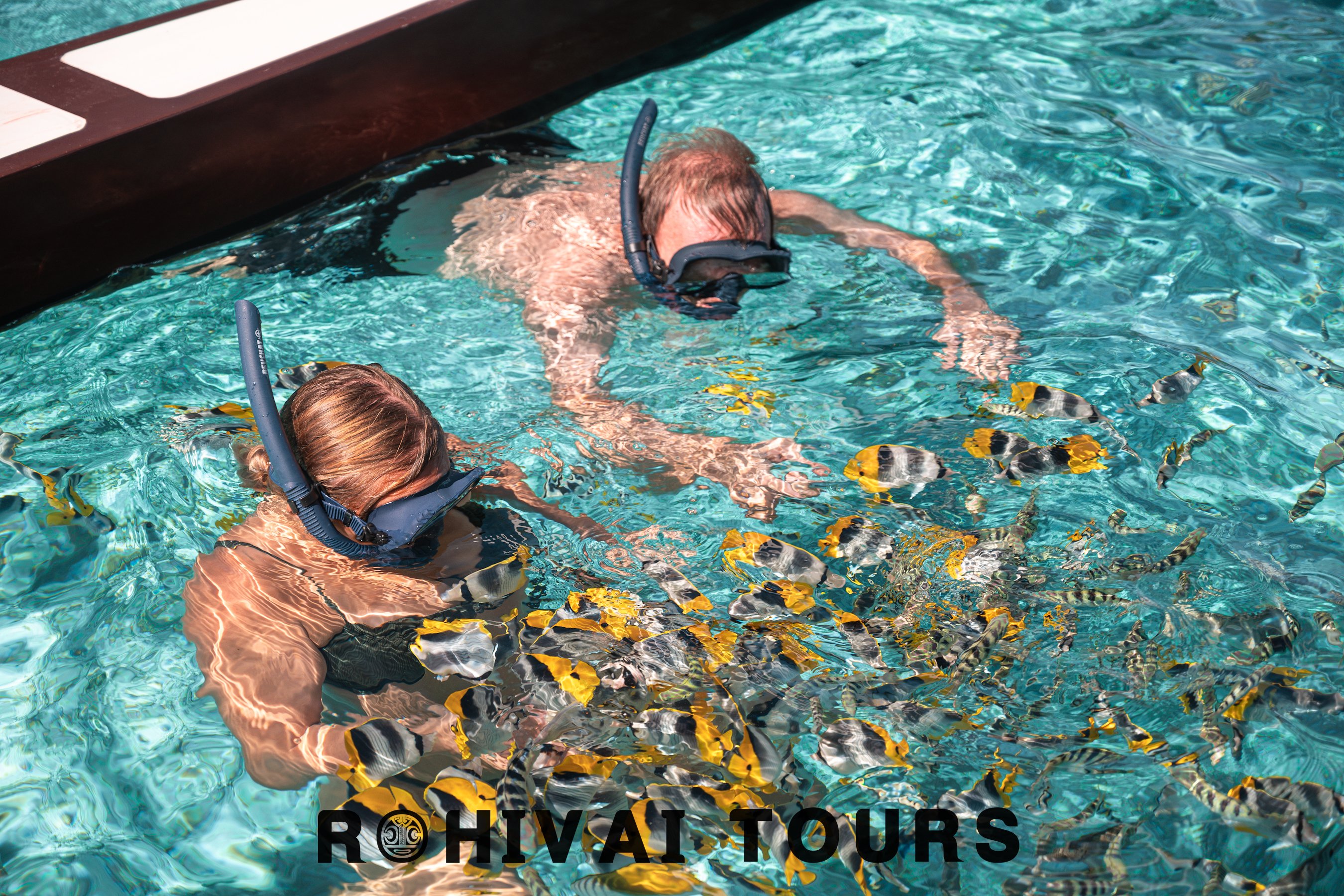
Fifteen minutes out, the engine cuts near a coral garden marked by a mooring buoy. You slip into water so clear you can count individual polyps on the brain coral six meters below. A hawksbill turtle surfaces ten meters to your left, exhales, and descends along the reef face.
The boat repositions to a sandy channel where your guide enters first, bread in hand. Within seconds, a dozen stingrays glide from deeper water, their wings stirring sand as they circle your group. A blacktip reef shark patrols the perimeter, ignoring the rays. You photograph a leopard ray half-buried in the sand, its spotted disc visible only when it shifts.
The final stop is a private motu on the lagoon's eastern edge, where crew grill tuna steaks over coconut husks and serve poisson cru in halved coconuts. You wade in knee-deep water, scanning for shells, before the return crossing to Vaitape at two.
All the details about your upcoming adventure in one place
The coral ring encircling Bora Bora's volcanic peaks is less than twelve thousand years old, yet its shelf carries more than a hundred fifty documented species of hard coral and soft gorgonian.
The lagoon formed as the extinct volcano subsided, leaving a barrier reef three kilometers offshore and a shallow inner basin where stingrays, blacktip reef sharks, and parrotfish navigate channels carved by tidal flow. French Polynesia designated the waters a marine reserve in 2002, prohibiting fish harvest within the lagoon and establishing mooring zones to protect coral heads from anchor damage. The result is a reef system dense enough that snorkelers can drift over coral bommies in four meters of water and count a dozen fish families in a single breath-hold.
Bora Bora snorkeling excursion operators follow fixed routes through the lagoon, stopping at named sites where visibility routinely exceeds thirty meters. The Coral Gardens lie along the western barrier, where brain coral colonies the size of dining tables anchor fields of staghorn and table coral. Guides carry breadfruit to attract rays at the southern motu, a sandy islet where blacktips circle in less than two meters of depth. The lagoon's clarity owes to its isolation from river silt and its twice-daily tidal flush through a single pass on the western reef. Morning tours depart between eight and nine, timing arrival at the outer reef before wind chop disturbs the surface. Full-day itineraries include a stop at a private motu for grilled mahi-mahi and poisson cru, the Tahitian raw-fish salad cured in lime and coconut milk.
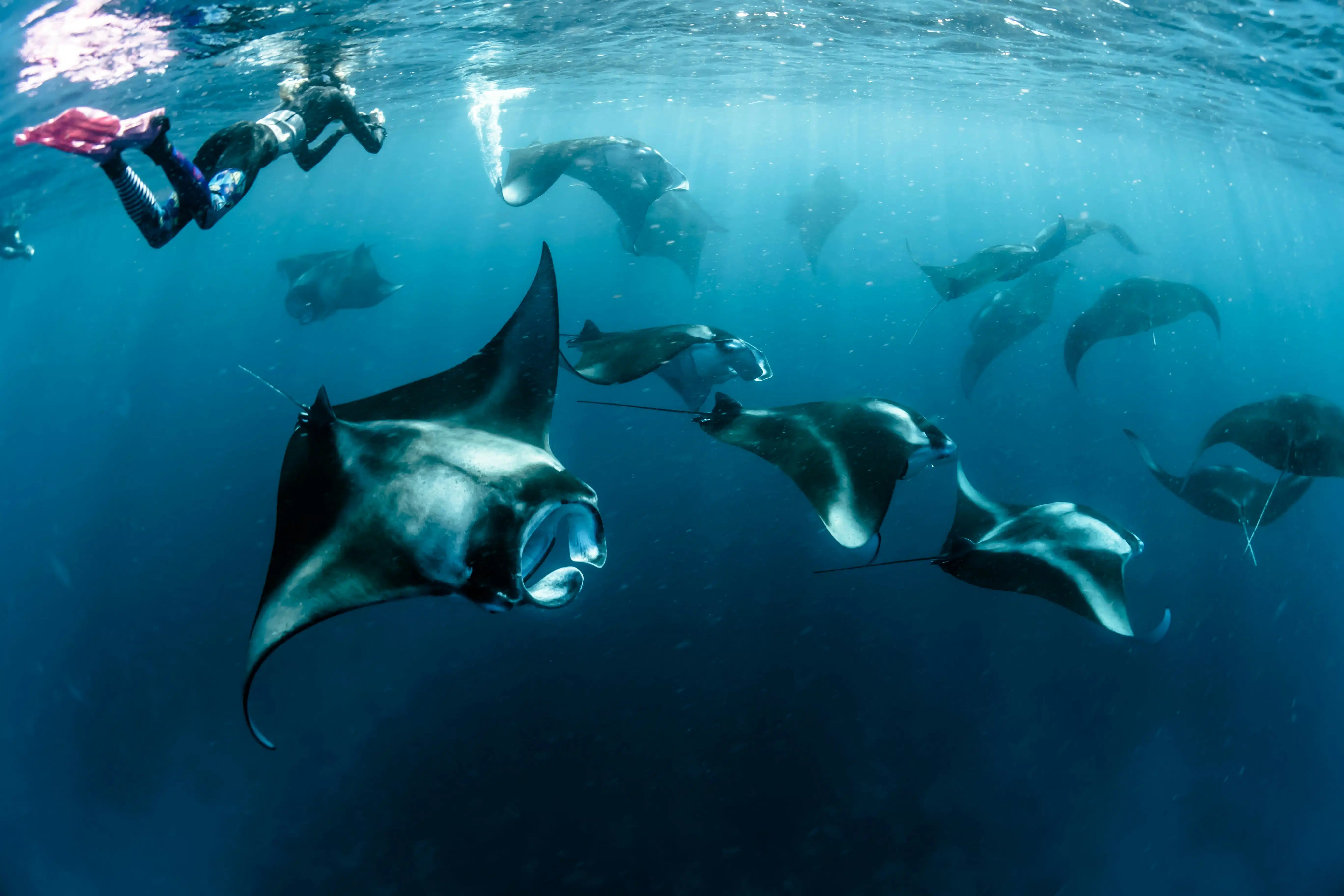
The lagoon's shallow depth makes it accessible to novice snorkelers, but the reef's complexity rewards repeat visits. Leopard rays rest in sand pockets near the barrier. Trumpet fish hover vertically in coral crevices. Moorish idols and butterfly fish patrol the drop-off where the reef face descends to the open ocean. Operators limit group size to twelve, preserving the lagoon's stillness and allowing guides to identify species without loudspeaker narration. The French Polynesian government prohibits reef-walking and feeding wild sharks, policies enforced by patrol boats that monitor the marine reserve daily.
The lagoon's clarity owes to its isolation from river silt and its twice-daily tidal flush through a single pass on the western reef.
Wear swimwear, a rash guard for sun protection, and water shoes during your bora bora snorkeling excursion. Ensure clothing provides comfort for both water activities and time spent on the boat deck.
Keep belongings in a dry bag to protect them from ocean spray during the bora bora snorkeling excursion. Most boat captains provide secure storage for small personal items on board.
Underwater cameras or waterproof housings are recommended for capturing marine life during a bora bora snorkeling excursion tour. Respect the environment and avoid touching coral reefs for the perfect shot.
Children are welcome on most family-friendly boat outings, provided they wear properly fitted life vests. Always supervise young swimmers near the edge of the water.
Some vessels for a bora bora snorkeling excursion may not be wheelchair accessible due to ladder boarding requirements. Guests with limited mobility should confirm vessel specifications before booking.
Bringing reusable water bottles is encouraged during your bora bora snorkeling excursion to minimize plastic waste. Some tours provide light refreshments or fruit platters on board.
Opening Hours
00:00–23:59
Address
Bora Bora Lagoon, French Polynesia
Accessibility
Varies by boat operator
Best arrival window
08:00–11:00
Navigation
Bora Bora Lagoon tours
Taxi · 15-30 min · Variable
Taxis are available at major resorts to take you to the Vaitape pier for your bora bora snorkeling excursion.
Boat · 10-20 min · Included in some tours
Many resorts offer direct transfers to the meeting point for your bora bora snorkeling excursion.
Operators typically require notice 24 to 48 hours in advance for a full refund on your bora bora snorkeling excursion tickets. No entry fee of 0 XPF applies to the lagoon itself, but commercial tour policies supersede this for boat services.
Recommended time
3 to 6 hours
Planning a bora bora snorkeling excursion requires balancing your schedule with the optimal water conditions found between 08:00 and 11:00. Most boat-based lagoon tours range from 2.5 to 7 hours, allowing enough time to explore coral gardens and encounter marine life like rays. Booking bora bora snorkeling excursion tours early helps you avoid the midday sun and peak boat traffic, ensuring a more peaceful experience while viewing the turquoise waters of the Bora Bora Lagoon, French Polynesia.
Crowd levels through the day
Weather · crowds · average price — dots go green to amber to red as each metric rises.
Dryer conditions make spring an excellent time for a bora bora snorkeling excursion tour. Expect temperatures around 26°C with optimal underwater visibility.
Summer brings warmer water temperatures, ideal for a long bora bora snorkeling excursion. Occasional tropical showers may occur in the late afternoon.
Autumn is perfect for seeing migrating marine life during your bora bora snorkeling excursion. Sea conditions remain calm with consistent sunshine.
Winter months offer refreshing water temperatures for any bora bora snorkeling excursion. Low wind levels ensure the lagoon stays flat and clear.
Check forecasts before booking your bora bora snorkeling excursion to ensure clear skies. Wind can affect water clarity if it becomes too strong.
Protect the coral by using mineral-based lotions for your bora bora snorkeling excursion. Chemical-based products damage the delicate marine ecosystem.
While gear is provided, bringing your own mask ensures a better fit for your bora bora snorkeling excursion. Clean your gear thoroughly after each use.
Drink plenty of water before and after your bora bora snorkeling excursion. The sun reflection off the water increases dehydration risk.
Guides provide vital safety information specific to your bora bora snorkeling excursion location. They also know where to find the best fish activity.
Bora Bora's relationship with snorkeling began long before the modern bora bora snorkeling excursion emerged as a commercial product. The island's protected lagoon, formed by a barrier reef system approximately 3.5 million years ago during volcanic subsidence, created the shallow turquoise waters that would eventually attract underwater explorers. Indigenous Polynesians who settled Bora Bora around 300 CE developed intimate knowledge of the lagoon's channels, coral gardens, and marine life, diving for fish and shellfish with handmade spears and woven nets. European contact arrived in 1722 when Dutch navigator Jakob Roggeveen sighted the island, though it was James Cook's 1769 visit that brought the first written descriptions of the reef ecosystem to Western audiences. The transformation from subsistence fishing grounds to tourist destination accelerated after World War II. The United States military constructed an airstrip and naval base on Bora Bora between 1942 and 1946, employing over 6,000 personnel who introduced cash wages and exposed locals to recreational swimming culture. After the base closed, French Polynesian entrepreneurs began offering lagoon tours in traditional outrigger canoes during the 1960s. The first dedicated snorkeling tours using modern masks and fins launched in the early 1970s, coinciding with the opening of Hotel Bora Bora in 1961 and the completion of Bora Bora Airport's civilian terminal in 1958. Tour operators identified key sites including the coral gardens near Motu Tapu and the Ray Feeding Station, where stingrays congregated naturally before guides began supplementing their diet to ensure reliable encounters. Commercial pressures intensified after Tahiti tourism campaigns in the 1980s branded French Polynesia as a luxury destination. The bora bora snorkeling excursion industry formalized with motorized boat fleets, standardized itineraries, and environmental guidelines introduced in 1993 following coral damage reports. Today's operators navigate protected marine zones established in 2006, balancing visitor access with reef conservation while offering tours that trace routes Polynesian fishermen followed centuries earlier.
Polynesian settlers establish fishing and diving traditions in Bora Bora's lagoon using traditional free-diving techniques.
Dutch explorer Jakob Roggeveen becomes the first European to sight Bora Bora and its barrier reef system.
U.S. military base construction introduces cash economy and recreational water activities to island residents.
First commercial snorkeling tours launch using modern equipment, targeting guests from newly opened luxury resorts.
French Polynesia introduces environmental guidelines for tour operators following reports of coral stress from increased visitor traffic.
Protected marine zones established within Bora Bora lagoon to regulate commercial excursion routes and preserve reef ecosystems.
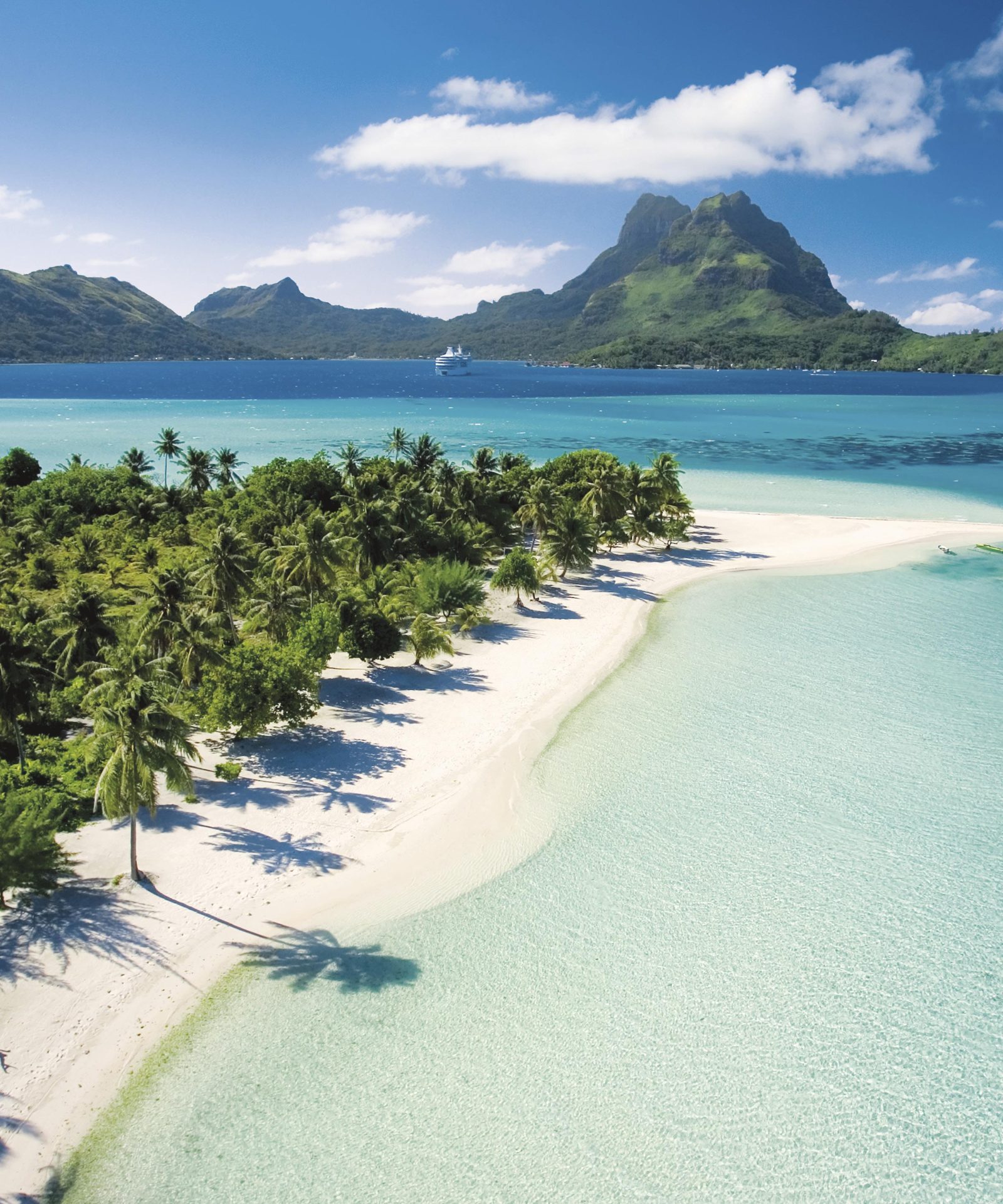
Stand in ankle-deep turquoise water on these shallow banks to capture clear shots of the surrounding coral reef. The contrast between the bright white sand and deep blue lagoon provides the perfect backdrop for your bora bora snorkeling excursion.
Position your camera at the water surface while submerged to capture stingrays and blacktip reef sharks circling the area. This location is a staple of any bora bora snorkeling excursion tour where marine life is abundant.
Float through the narrow channels where soft corals flourish to photograph colorful tropical fish in their natural habitat. Use an underwater housing to stabilize your shots while navigating these bora bora snorkeling excursion tours.
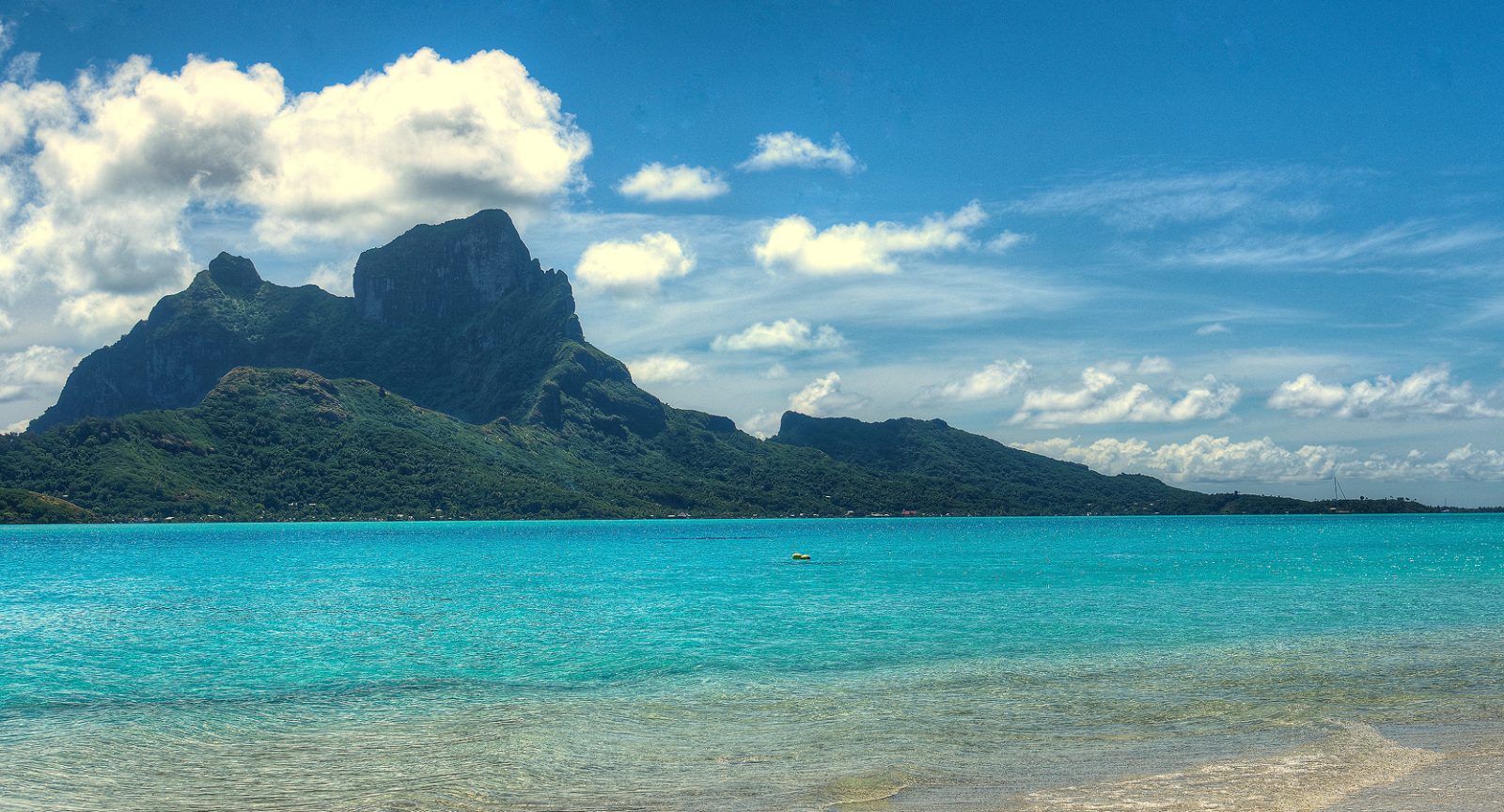
Shoot from the boat deck looking toward the island to frame the iconic jagged peaks rising above the vibrant blue lagoon. Many visitors purchase bora bora snorkeling excursion tickets specifically to secure this perspective of the landscape.
Planning a bora bora snorkeling excursion provides families with a chance to explore vibrant coral reefs and marine life directly in the South Pacific. Preparing for these water-based activities ensures that children remain comfortable and safe while observing the local aquatic ecosystem.
Most commercial bora bora snorkeling excursion tours require all children to wear life jackets regardless of their swimming ability. Always confirm that your provider carries properly sized gear for toddlers and small kids before finalizing your bora bora snorkeling excursion tickets.
Opt for private boat charters if you prefer exploring calmer, shallow lagoon areas that are ideal for younger swimmers. These smaller boats often offer more flexibility to reach protected sandy banks away from stronger currents.
The best arrival window is 08:00–11:00, as the calm morning waters provide optimal visibility for children new to the activity. Aiming for an early start allows you to finish before midday winds arrive or boat traffic increases in the Bora Bora Lagoon, French Polynesia.
Bring your own kid-sized masks and snorkels if you have them to ensure a secure fit and better comfort for smaller faces. Professional operators provide standard gear, but having familiar equipment can significantly improve the experience for younger family members participating in a bora bora snorkeling excursion tour.
Most visitors plan their meal around the motu picnic included with a full-day bora bora snorkeling excursion, as on-site facilities at the lagoon are limited. For those scheduling their own bora bora snorkeling excursion tours, picking up supplies in Vaitape is the standard approach before heading to the water.
A local landmark famous for its sandy floors and fresh fish dishes. It is a popular spot to relax after finishing your bora bora snorkeling excursion tickets.
Everything you need to know for your journey
The best arrival window is 08:00–11:00 to ensure the clearest water for your bora bora snorkeling excursion.
Yes, you must purchase or reserve tickets in advance for commercial bora bora snorkeling excursion tours.
While the lagoon has access 00:00–23:59, most organized tours operate during daylight hours.
Yes, you are welcome to bring your own snorkel gear for a more comfortable bora bora snorkeling excursion.
Most participants use taxis or hotel boat transfers to reach the Vaitape pier for their bora bora snorkeling excursion.
Yes, families are welcome, but check with your specific operator regarding age requirements for the bora bora snorkeling excursion.
Some packages include snacks or a light lunch, so verify the inclusions of your bora bora snorkeling excursion.
You can typically receive a refund by cancelling within the window specified by your bora bora snorkeling excursion operator.
Most tours are beginner-friendly, but ensure you are comfortable in the water before starting your bora bora snorkeling excursion.
Pack a towel, reef-safe sunscreen, and a waterproof camera for your bora bora snorkeling excursion.
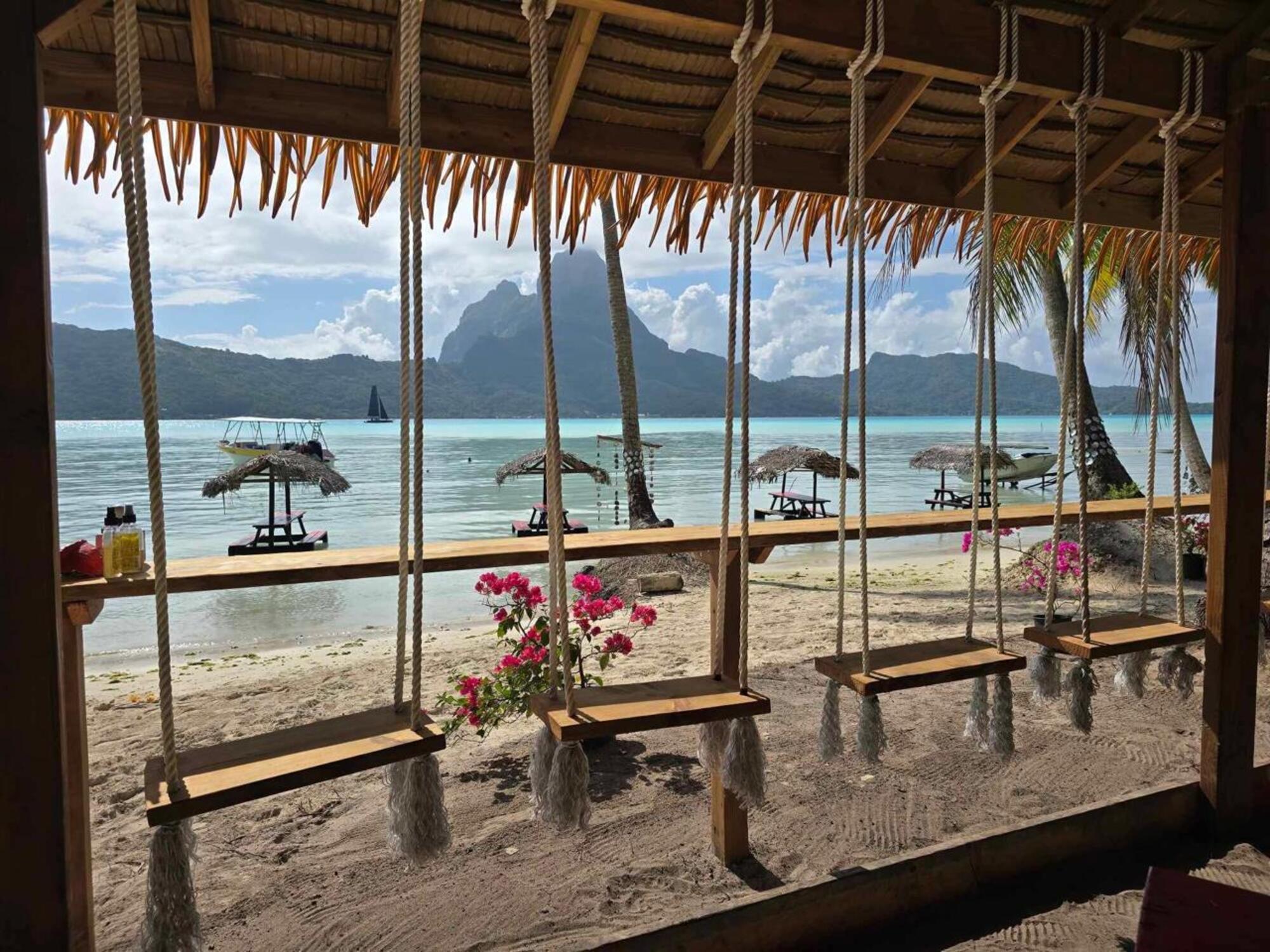
Iconic dormant volcano centerpiece of the island.
High-end overwater bungalows in the lagoon.
Join thousands of happy travelers who have discovered this incredible experience
Book Your Experience Now